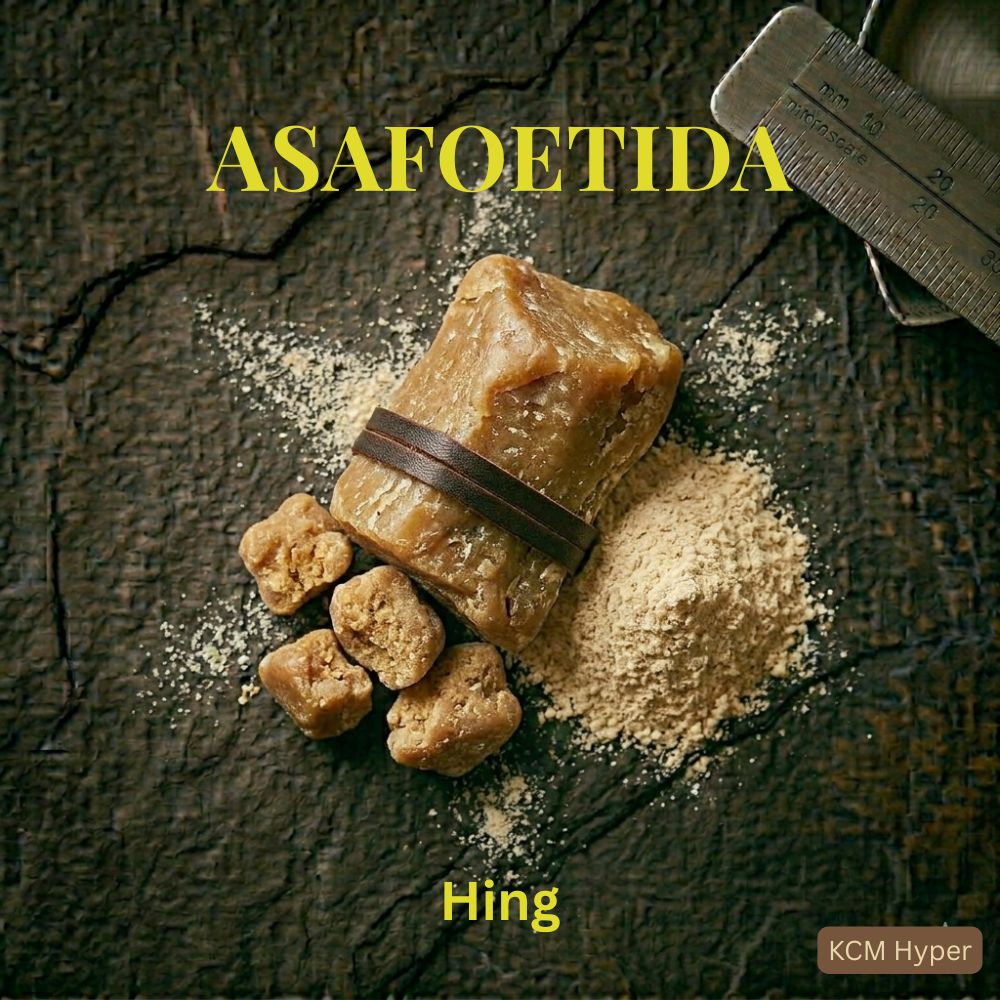
Asafoetida (Hing)
The Essential Flavor Enhancer of Indian Cooking
Hing is a powerful spice known for its digestive benefits and its ability to enhance flavor even in the smallest quantities.
🌿 Overview
Asafoetida, commonly known as hing, is a strong and aromatic spice widely used in Indian cooking. It has a pungent smell in its raw form but transforms into a rich, savory flavor when cooked. Hing is especially popular in vegetarian dishes, where it adds depth similar to onion and garlic.
🏺 Heritage & Origin
Hing has been used in Indian cuisine and Ayurveda for centuries. Traditionally imported and later blended locally, it became a staple in Indian households. It holds a special place in Jain and Brahmin cooking where onion and garlic are avoided.
💪 Health Benefits
- Improves digestion and reduces bloating
- Helps relieve gas and acidity
- Known for anti-inflammatory properties
- Traditionally used for respiratory support
🍳 Popular Uses
- Tadka (tempering) for dals and curries
- Vegetable sabzis
- Pickles and chutneys
- Digestive home remedies
👨🍳 How to Use
Hing is typically added in a pinch to hot oil or ghee at the beginning of cooking. Due to its strong flavor, only a small quantity is needed. It blends well with spices like cumin, mustard seeds, and turmeric.
📦 Storage Tips
Store hing in a tightly sealed container to prevent its strong aroma from spreading. Keep it in a cool, dry place away from moisture for long-lasting freshness.
❓ Frequently Asked Questions
1. What is hing used for?
Hing is used for flavoring dishes and improving digestion.
2. Why does hing smell strong?
In raw form it has a pungent smell, but cooking makes it mild and flavorful.
3. Is hing good for digestion?
Yes, it is widely known for reducing bloating and aiding digestion.
4. Can hing replace onion and garlic?
Yes, it is commonly used as a substitute in many traditional recipes.
Explore more spices: Ajwain | Cumin | Mustard Seeds | Turmeric
Comments
Post a Comment